
The Fall 2026 Color Trends Everyone Will Be Wearing
Fall 2026 color trends are shifting fast, and the colors actually moving this season aren't all the usual suspects. If you're wondering what will sell this fall, you're in the right spot. We track this stuff daily at Trendalytics, and the data tells a different story than most fashion roundups.
Here's why it matters: buying the wrong colors this fall costs real money. Racks of unsold sweaters in the wrong shade don't help anyone. Our AI trend prediction models track color signals across social, resale, and early sell-through data, months ahead of the usual roundups. So we broke down what's actually moving across the US, not just what looked good on a runway in New York.
How Trendalytics Predicts Color Trends
Most fall 2026 color trends lists just report what already happened at fashion week. That's rearview mirror stuff, and it's too late to act on.
Trendalytics does color trend forecasting differently. We track:
- Search behavior across major retailers and marketplaces
- Resale platform activity (what's reselling fast tells you what's next)
- Early sell-through data before a color peaks
- Social signal, not just runway photos
By the time a shade hits a magazine cover, we've usually flagged it weeks earlier. That gap is what brands actually pay for.
The Fall 2026 Color Trends Everyone's Talking About
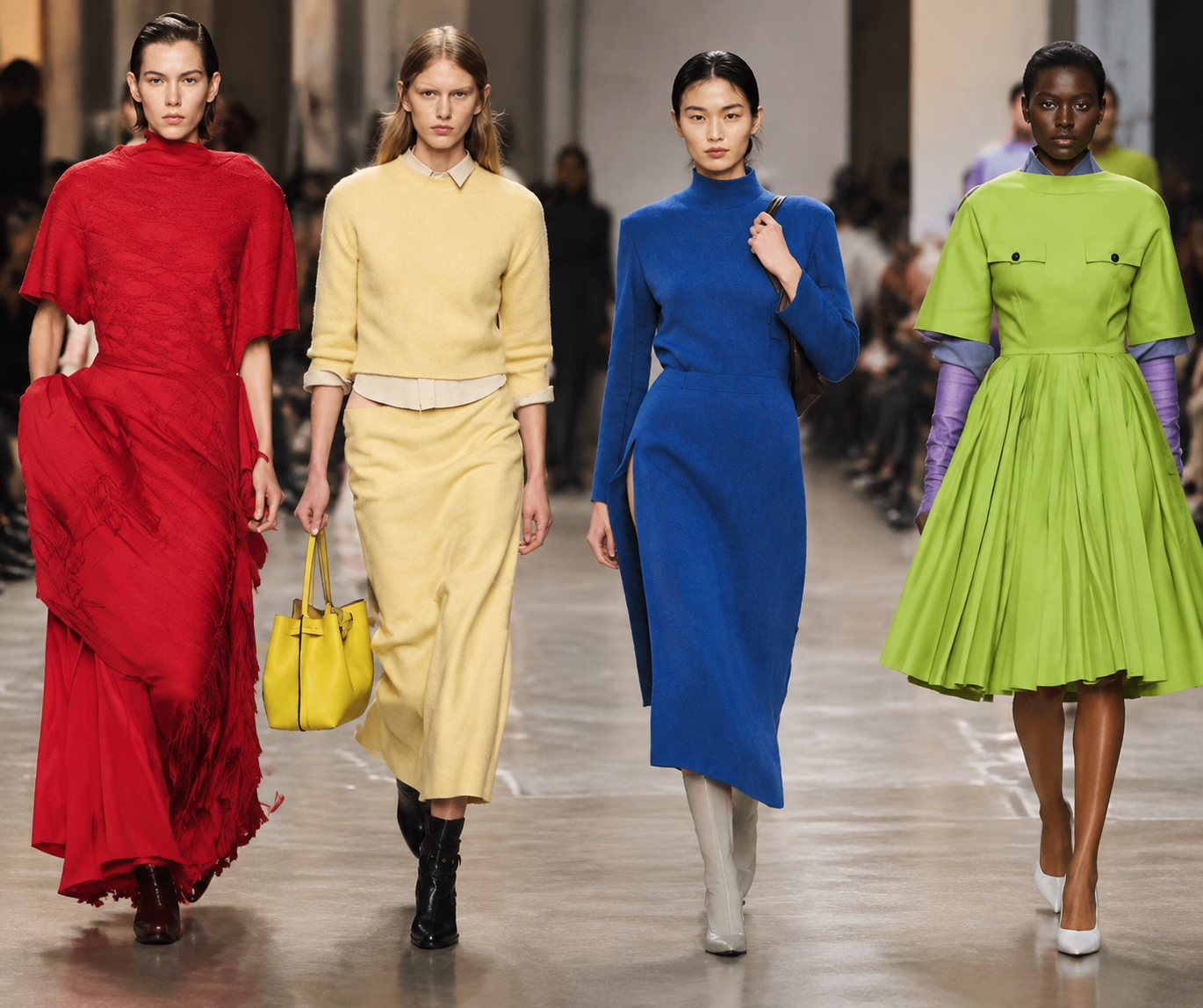
Let's get into the actual colors. These are the ones showing real movement in search and sales data right now, not just runway buzz.
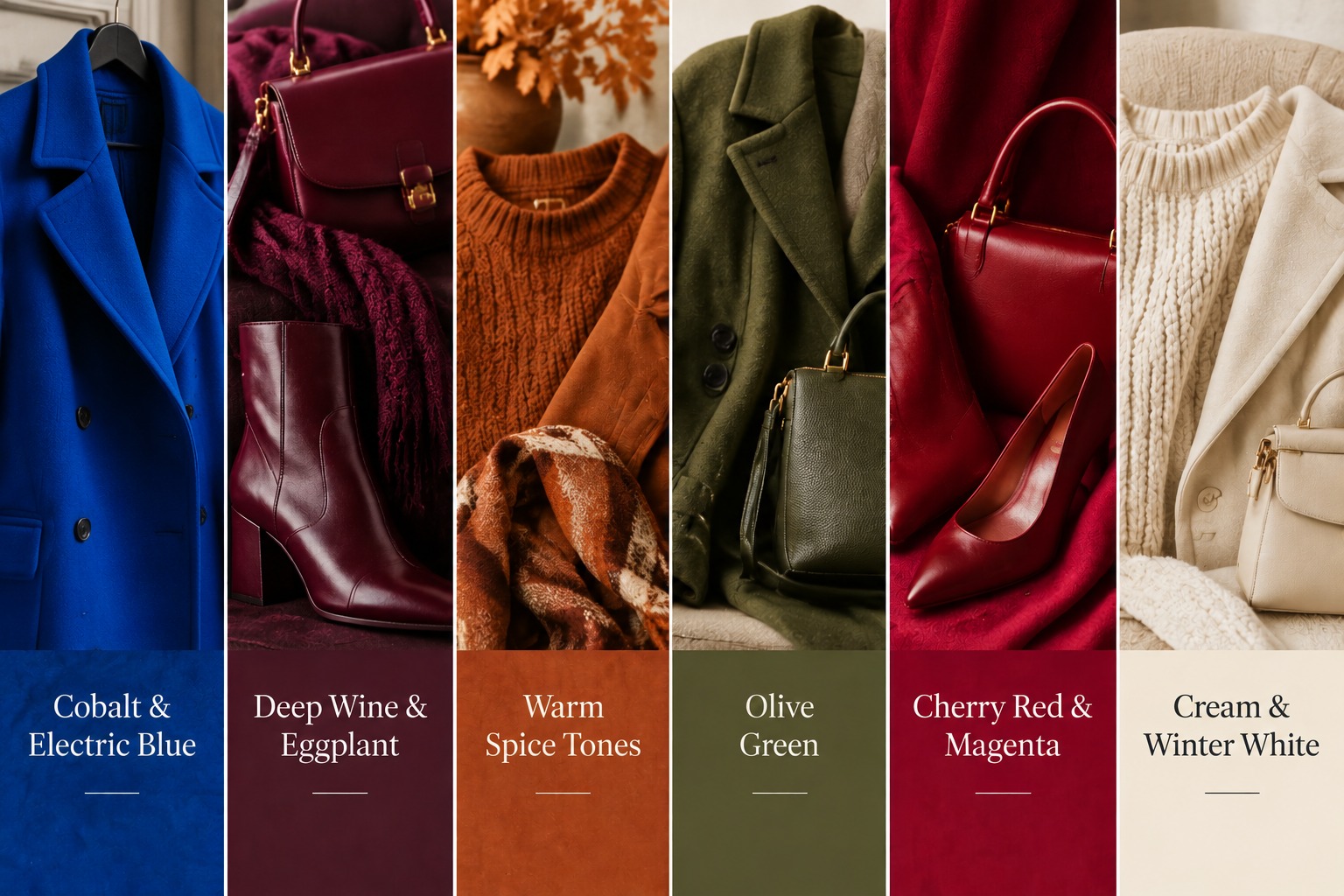
Cobalt & Electric Blue
Cobalt blue isn't new for 2026, but it's not fading either. It carried through spring and summer without losing steam. This shade works best against neutrals. Try it with camel, brown, or even black denim. Shoppers in Chicago and New York are already picking up cobalt outerwear for fall. It reads bold without feeling costume-y.
It's also moving fastest in coats and knitwear right now, not accessories. That tells us this one has real staying power this season, not just a runway spike. If you're only adding one bold color to a fall lineup, this is the safer bet, it's proven itself across three seasons in a row.
Deep Wine & Eggplant
Burgundy shows up every fall, but this year it's paired differently. Brands are mixing it with eggplant and deep plum instead of standard black. Both colors work for outerwear, bags, and boots. They photograph well too, which matters for e-commerce listings. One thing we've noticed: this shade sells faster in colder regions. Retailers in the Midwest and Northeast should stock heavier on it.
These wine tones also layer well, a deep sweater under a black coat, or eggplant boots against plain denim. And they sit close enough on the color wheel that mixing the two together reads as intentional, not clashing. Boston and Chicago buyers in particular are moving on this faster than the coasts.
Warm Spice Tones
Turmeric, terracotta, and marigold count as this year's earthy tones. They add warmth without going full orange. These colors work as a neutral, not just an accent. Pair them with cream or soft grey for balance. Texas and the Southwest are already showing strong early sell-through on rust and terracotta pieces. Makes sense, warm tones suit warmer climates longer into the season.
Texture does a lot of the work here too. Corduroy, suede, and knit in these shades feel deliberate, where the same color in a flat cotton can read flat or cheap. If a Southern or Southwestern retailer is only picking one trend to lean into hard this fall, this is it, the season runs longer there.
Olive Green
Olive keeps showing up every single fall, and for good reason. It's flexible, wears well, and doesn't scream trendy. Pair it with cream, chocolate brown, or denim. It's basically a neutral at this point. If a wardrobe only gets one new color this fall, olive is the safe bet.
It also pairs surprisingly well with metallic hardware, gold buttons, bronze zippers, which gives it a slightly dressed-up edge without much effort. Nationwide, it's the one color on this list that doesn't skew heavily to any single region. It just sells, everywhere, every fall.
Cherry Red & Magenta
Cherry red and magenta are the loud ones this season. They're bright, bold, and made for one statement piece. Think a bag, a boot, or a blazer, not a full outfit. Too much of either can overwhelm a look fast. Los Angeles shoppers are leaning into magenta accessories more than full pieces, based on what we're tracking.
Both colors do well on social because they photograph loud. But that doesn't always translate to full-piece sales, it's mostly an accessory play right now, which matters if you're planning inventory around it.
Cream & Winter White
Cream and winter white break the usual no-white-after-summer rule. Against heavier fabrics like wool and leather, they read fresh instead of out of place.
They also work as a layering base under darker coats, which stretches their use well past a single outfit. A cream turtleneck under a wine-toned coat pulls together three of this season's trending colors in one simple look. Want this dropped into the Word doc and the file regenerated?
Fall 2026 Colors Across the US
Color trends don't hit every region the same way, and that's worth knowing before you buy. What moves fast in one city can sit on shelves for weeks in another.
- Northeast: leans into deep, cool tones like wine and cobalt earlier in the season. Cold weather hits sooner, so heavier colors sell faster here.
- Midwest: tracks closely with the Northeast; cities like Chicago show early demand for the same cool, saturated shades.
- South & Southwest: holds onto warm tones longer. Terracotta and olive stay relevant well into November in states like Texas and Arizona.
- West Coast: cities like Los Angeles and San Francisco favor accent colors over full outfits. Bold accessories do better than bold coats.
So if a brand is buying inventory nationally, it shouldn't treat the whole US market the same. What sells in Boston won't move the same way in Phoenix, and planning around one national "trend" instead of regional demand is how stock ends up stuck on shelves.
What This Means for Retailers and Brands
Spotting a trend early doesn't help much if a brand can't act on it. That's where retail color trends data actually pays off. Retailers using real sell-through numbers can adjust orders before a color peaks, which means less markdown pressure later in the season.
Brands designing for next year should be watching this now, not waiting for spring runway shows. By then, the window's already closing. Here's something we've seen firsthand: brands that lock a palette too late end up chasing a trend instead of leading one. And chasing never pays as well.
How to Style These Colors Without Overspending
A full closet overhaul isn't needed to wear these colors. A few small swaps go a long way.
- Add one cobalt piece to an existing neutral wardrobe
- Use cherry red or magenta as a single accent, not head to toe
- Layer warm spice tones over cream for contrast
- Let olive do double duty as an everyday neutral
- Save winter white for layering under darker coats
Small changes add up fast. Ten new pieces aren't needed to look current this fall.
Common Mistakes Brands Make with Color Trends
A lot of brands get this wrong every single season. Here's what we see most often.
- Buying too much of one color too early: trends shift faster than most buying calendars account for.
- Ignoring regional differences: a color that moves fast in New York might sit on shelves in Phoenix.
- Waiting for runway confirmation: by the time a color hits every fashion magazine, the early advantage is gone.
- Skipping the data and going with gut instinct alone: gut instinct built half-empty stockrooms for a reason.
Want this dropped into the Word doc along with the other reworked sections, and the file regenerated?
How to Use This Report for Fall Buying
Reading a trend report is one thing. Turning it into a buying decision is another. Here's a simple way to use it.
Start with your region. A Boston retailer and a Phoenix retailer shouldn't be buying the exact same mix, even if they sell the same brands. Next, check your current stock against the table above. If your color mix leans heavy on summer brights, it's time to shift toward the season's neutrals and accents.
Then, watch the early movers, not the loud ones. Cobalt and wine tones are already showing sell-through. Bright red and magenta are still building. Finally, don't overcommit to one shade. Even strong trends fade by January. Small, frequent reorders beat one giant bet every time. This isn't complicated. It just takes watching the right numbers instead of guessing off a runway photo.
How Long Will This Trend Last?
Color trends don't just switch off overnight. Most fall shades stay relevant for four to six months before fading. Cobalt has already proven it has staying power, carrying through three seasons in a row. That's rare, and it's worth paying attention to. Warmer tones like terracotta usually hang around longer in southern states, simply because the weather supports them longer. Bold accent colors like magenta tend to burn out faster, they peak, get photographed everywhere, and fade within a couple months.
So the real question isn't just what's trending. It's how long a color has left before demand drops off. Here's the season at a glance:
- Cobalt: bold, electric mood; strongest in the Northeast and Midwest; best in outerwear or as one statement piece
- Wine & Eggplant: moody, rich mood; strongest in the Northeast and Midwest; best in coats, bags, and boots
- Warm Spice Tones: warm, earthy mood; strongest in the South and Southwest; best as layering pieces or neutrals
- Olive: reliable, neutral mood; sells nationwide; best as an everyday basic
- Cherry Red & Magenta: loud, bold mood; strongest on the West Coast; best as accessories or accents
- Cream & Winter White: fresh, light mood; sells nationwide; best layered under coats
Want me to drop all the reworked sections into the Word doc now and regenerate the full file?
Final Word
Fall 2026 color trends are moving fast, and the brands paying attention now will have the edge later. Waiting for a trend to become obvious means missing the best window to act on it.
That's exactly the fashion color forecasting work Trendalytics does best. Want to see what's coming for next season before everyone else does? Get in touch to see how our forecasting models can work for your buying calendar.
FAQs
1. What are the biggest fall 2026 color trends?
Cobalt, wine tones, warm spice colors, olive, cherry red, and winter white are the standout colors for fall 2026.
2. Do color trends vary across different US regions this fall?
Yes. The Northeast and Midwest lean into cooler tones earlier in the season, while the South and Southwest hold onto warm tones like terracotta longer.
3. Is cobalt still a top color for fall 2026?
Yes. Cobalt carried through spring and summer 2026 and remains one of the strongest colors heading into fall.
4. What's the best neutral color for fall this year?
Olive is the top neutral for fall 2026, with warm spice tones like terracotta working as a close second.
5. How does Trendalytics predict color trends before they happen?
Trendalytics tracks search behavior, resale platform activity, and early sell-through data, not just runway shows, to flag trends weeks ahead of the fashion press.
6. What colors pair well with olive this fall?
Cream, chocolate brown, and denim all pair easily with olive for fall 2026.
7. Should retailers buy the same colors for every US region?
No. Regional buying patterns differ across the US, so inventory should reflect local demand rather than one national color strategy.
Get ahead and stay
ahead with AI-powered trend forecasting.
Request a demo. Our AI tools are unmatched in the marketplace for predictive data and trend forecasting.