
3-3-3 Fashion Rule: The Trend Taking Over Wardrobes

The 3-3-3 FASHION RULE is a simple wardrobe method. You pick 3 tops, 3 bottoms, and 3 pairs of shoes. These 9 pieces work together to create over 27 outfits. It removes the stress of getting dressed every morning. And it is taking over closets across the US right now.
This topic matters for everyone: busy professionals, students, travelers, and fashion lovers. If you waste time every morning staring at your closet, this rule is for you. If you are a brand or retailer, this trend is already changing how Americans shop. Understanding it now puts you ahead of the curve.
What Exactly Is the 3-3-3 Fashion Rule?
The 3-3-3 rule in Fashion means choosing exactly 9 clothing items: Three tops, three bottoms, and three pairs of shoes. Every piece must mix and match with the others.
Here is the simple math:
$$3 \text{ tops} \times 3 \text{ bottoms} \times 3 \text{ shoes} = 27 \text{ unique outfits}$$
That is nearly a month of different looks from just 9 items.
This idea grew from a movement called Project 333, created by Courtney Carver in 2010, which originally used 33 items for 3 months. However, the 3-3-3 version simplifies it even further, focusing only on the core building blocks of any outfit.
While Carver laid the groundwork for minimalism, this specific 9-item format exploded into a viral sensation thanks to TikTok fashion creator Rachel Spencer (@rachspeed). She coined this exact spin-off as a clever packing hack for a trip, sparking a massive wave of internet challenges.
The key difference from just "owning fewer clothes" is intentionality. Every piece you pick must earn its place. It must work with everything else in your 9-item set. If it does not match at least two other pieces, it does not belong.
Wanna learn more? Read our full breakdown on
Why the 3-3-3 Rule in Fashion Is the Next Big Trend?
The Hidden Rules: What Doesn't Count?
Before you start counting your items, it helps to understand the "fine print" of the challenge. To keep the rule practical for daily life, certain items are completely excluded from your 9-item limit:
- The Basics: Underwear, socks, shapewear, and basic camisoles used strictly for layering do not count.
- Loungewear & Sleepwear: Your pyjamas and around-the-house sweatpants are exempt.
- Activewear: Workout gear only counts if you plan to style it as part of your everyday streetwear.
- The Outerwear Exception: Heavy winter coats or rain jackets used solely for weather protection don't count toward your three-tops limit. However, lightweight layering pieces like cardigans, blazers, or shackets do count if they are central to the outfit's look.
Why Is It Trending Right Now?
Before you start counting your items, it helps to understand the "fine print" of the challenge. To keep the rule practical for daily life, certain items are completely excluded from your 9-item limit:
- The Basics: Underwear, socks, shapewear, and basic camisoles used strictly for layering do not count.
- Loungewear & Sleepwear: Your pyjamas and around-the-house sweatpants are exempt.
- Activewear: Workout gear only counts if you plan to style it as part of your everyday streetwear.
- The Outerwear Exception: Heavy winter coats or rain jackets used solely for weather protection don't count toward your three-tops limit. However, lightweight layering pieces like cardigans, blazers, or shackets do count if they are central to the outfit's look.
The Psychology Behind It
There is a real science behind why this rule works. It is called decision fatigue. Every morning, your brain makes hundreds of small choices. What to eat. What to wear. How to style your hair. Each decision uses mental energy. By the time you get to work, you have already burned through some of your best thinking.
The 3-3-3 fashion rule fixes this. When your wardrobe is small and intentional, there are no bad choices. Everything fits. Everything matches. You just pick and go.
Fashion psychologists say people who use simple wardrobe systems feel more confident. They stop worrying about their appearance because they already know they look good. That confidence carries into the rest of their day.
There is also a deeper benefit. When your wardrobe is small but thoughtful, it reflects your real personal style. Instead of chasing every new trend, you learn what actually suits you.
How to Build Your Own 3-3-3 Wardrobe
Building your 3-3-3 fashion rule wardrobe is easier than it sounds. Follow these five steps:
- Step 1: Empty your closet. Take everything out. Lay it all on your bed. This helps you see what you actually own.
- Step 2: Pick your favorites. Choose 3 tops, 3 bottoms, and 3 pairs of shoes that fit well and make you feel good.
- Step 3: Check the colors. Stick to neutrals like black, white, beige, and navy. These mix easily. Every piece should match at least two others.
- Step 4: Test your combinations. Mix your tops and bottoms in different ways. Count how many outfits you can make. Aim for at least 20.
- Step 5: Add accessories. A scarf, belt, or simple jewelry can make each outfit look completely different.
Common mistakes to avoid: Do not pick pieces that only work with one other item. Do not chase trends when building your base 9. And do not overthink it, start with what you already love and wear most often.
Outfit Ideas & Styling Hacks Using the 3-3-3 Rule
To actually make 9 items look like 27 distinct outfits without looking like you are wearing the same uniform every day, you need to rely on a few styling illusions:
- The Button-Down Trick: A classic button-down shirt can be worn fully buttoned up, completely open as a light jacket layer over a t-shirt, or tied at the waist over a skirt. That's three entirely different silhouettes from one top.
- The Cardigan Flip: Wear a cardigan open over a base layer, buttoned up normally as a sweater, or turn it completely around and wear it backwards for a chic, high-neck statement-back look.
- The Sandwich Rule: Balance your outfits visually by matching the color or vibe of your shoes to your top, creating a cohesive "sandwich" effect that instantly makes simple outfits look intentionally styled.
Example Classic Capsule Set:
- 3 Tops: White button-down shirt, black t-shirt, beige cardigan
- 3 Bottoms: Blue jeans, black trousers, a midi skirt
- 3 Shoes: White sneakers, ankle boots, loafers
From these 9 pieces, here are three ready-made looks:
- Casual: Black t-shirt + blue jeans + white sneakers. Add a crossbody bag for extra style.
- Work: White shirt + black trousers + loafers. Add a watch for a sharp, professional look.
- Weekend: Beige cardigan + midi skirt + ankle boots. Add light jewelry for a relaxed, put-together vibe.
The Maximalist Alternative: It's Not Just for Neutrals!
A common misconception is that the 3-3-3 rule only works for lovers of beige, black, and white. A massive sub-trend on social media features Maximalist 3-3-3 challenges. Instead of solid neutrals, creators use 3 bold prints (like leopard or stripes), 3 vibrant colours (like cherry red or cobalt blue), and 3 highly textured pairs of shoes (like metallic flats or suede boots). The same math applies, proving that a capsule wardrobe can be wildly expressive and full of personality.
Outfit Ideas Using the 3-3-3 Rule
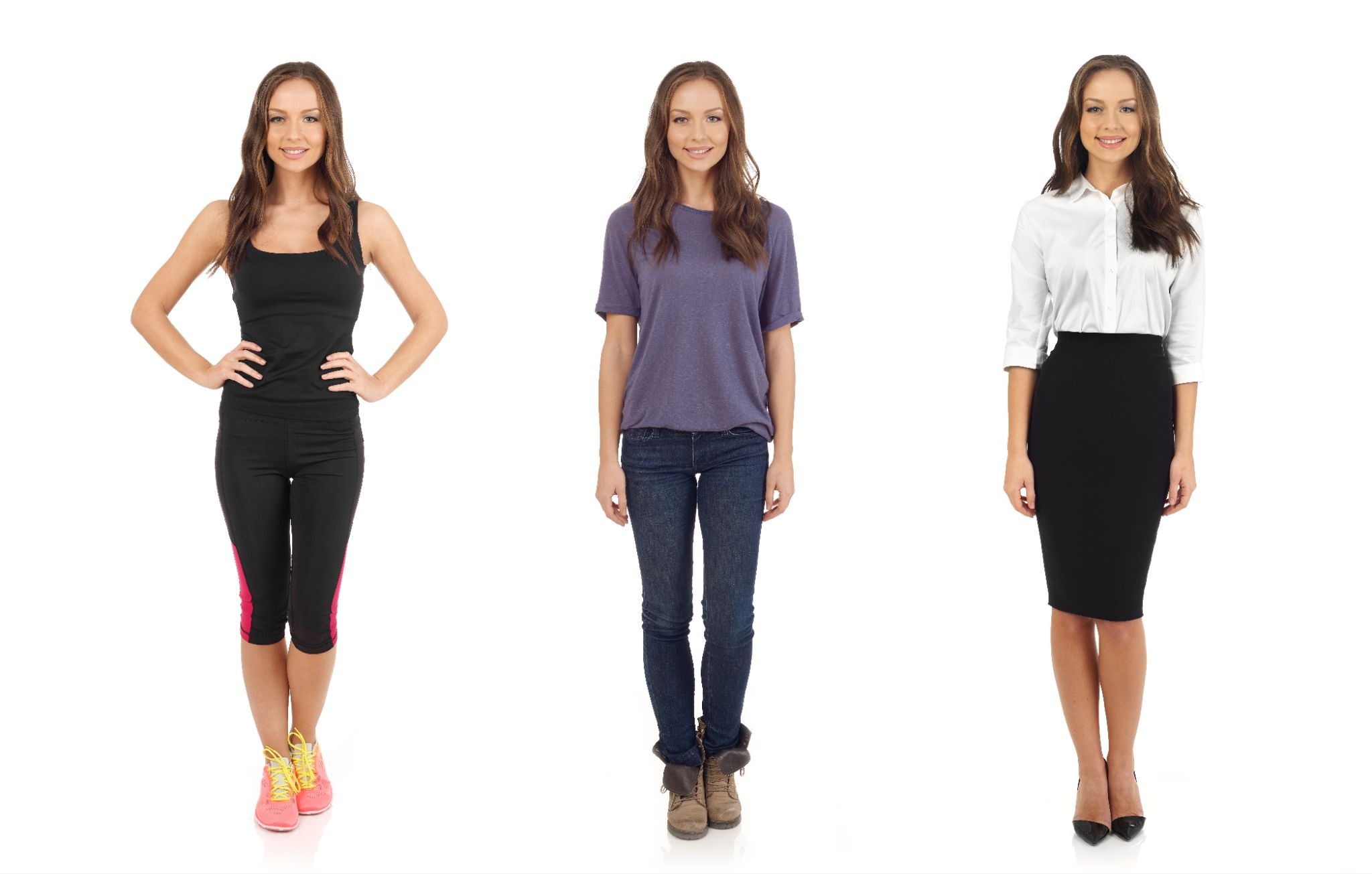
Here is a simple example set to show you how it works:
- 3 Tops: White shirt, black t-shirt, beige sweater 3 Bottoms: Blue jeans, black trousers, a midi skirt 3 Shoes: White sneakers, ankle boots, loafers. From these 9 pieces, here are three ready-made looks
- Casual: Black t-shirt + blue jeans + white sneakers. Add a crossbody bag for extra style.
- Work: White shirt + black trousers + loafers. Add a blazer and a watch for a sharp, professional look.
- Weekend: Beige sweater + midi skirt + ankle boots. Add light jewelry for a relaxed, put-together vibe.
And that is just three combinations. You actually have 27. Accessories push that number even higher. The math works in your favor every single time.
3-3-3 Rule and Sustainable Fashion
The 3-3-3 fashion rule is not just good for your mornings. It is good for the planet, too. The average American throws away around 80 pounds of clothing every year. Most of it ends up in landfills. Fast fashion is one of the biggest contributors to this waste.
When you buy 9 intentional pieces instead of 90 random ones, you produce far less waste. You spend less money. You buy higher-quality items that last longer. Research shows that extending the life of clothes by just 9 months can reduce their environmental impact by 20 to 30 percent.
This connects to a bigger movement called slow fashion. It is the opposite of fast fashion. Slow fashion means buying less, choosing better, and wearing longer. The 3-3-3 rule is slow fashion made simple and practical for everyday life.
What Trend Data Says About the 3-3-3 Movement
Data does not lie. And the data around this trend is clear.
Search interest in capsule wardrobes and minimalist fashion has been climbing steadily. Social signals, likes, shares, saves, and hashtag volume are all pointing in one direction. Consumers are moving away from trend-driven hauls and toward intentional, data-driven trend forecasting of what actually lasts.
Platforms like Trendalytics track these signals across search, social media, and shopping behavior. The pattern is consistent. More people are searching for versatile, timeless pieces. Fewer people are searching for single-use trend items. This is not a passing moment. It is a measurable shift in how Americans think about getting dressed.
Brands that ignore this data will keep producing collections nobody wants. Brands that read it correctly will build products that sell through completely.
How Fashion Brands in the US Are Adopting the 3-3-3 Trend
Smart US fashion brands are already responding to this shift. Here is what that looks like in practice:
- Smaller, focused collections. Instead of hundreds of seasonal styles, brands are building tight capsule drops. Fewer pieces, higher quality, better sell-through.
- Mix-and-match merchandising. Stores now display items together to show how they combine. The goal is to help shoppers visualize their own 9-piece set.
- Versatility filters online. Many retailers now let shoppers filter by "versatile" or "minimalist" styles. This directly serves the 3-3-3 shopper.
- Influencer campaigns around capsule wardrobes. Brands are partnering with creators who build 3-3-3 content on TikTok and Instagram. It drives both awareness and trust.
Trend forecasting tools like Trendalytics help brands identify which base pieces consumers actually want before they invest in production. Getting that wrong is expensive. Getting it right is a competitive advantage.
How to Spot the Next Style Rule Before It Goes Mainstream
The 3-3-3 fashion rule did not explode overnight. It followed a pattern that repeats itself with every major fashion trend. It starts niche. A small group of minimalists and stylists adopt it. Then a few creators make videos about it. Then it hits TikTok at scale. Then the mainstream media covers it. By the time most brands react, the trend is already peaking.
The brands that win are the ones that see it coming early. That requires watching the right signals, search volume growth, social engagement velocity, and shifts in shopping behavior, before the trend goes mainstream. This is exactly what trend forecasting does. It reads those early signals and tells you where consumer interest is heading, not where it already is. The 3-3-3 fashion rule is a perfect case study. The data was there months before it went viral. Brands with the right tools saw it. Most did not.
The next style rule is already being built somewhere right now. The question is whether you will spot it in time.
Conclusion
The 3-3-3 fashion rule is more than a trend. It is a smarter way to dress. Nine pieces. Twenty-seven outfits. Zero morning stress. And it is backed by real consumer data showing that Americans are done with closet chaos.
Whether you are a fashion lover looking to simplify your mornings or a brand trying to understand where your customers are headed, this trend tells you something important. Less is winning. Intentional is winning. And the brands that see that early will be the ones that profit from it.
Want to stay ahead of trends like this one? Explore with Trendalytics and see what your customers want before they know it themselves.
FAQs
Q1. Can men follow the 3-3-3 fashion rule?
Yes. The rule works for everyone. Men can pick 3 shirts, 3 pants, and 3 pairs of shoes. The same mix-and-match logic applies perfectly.
Q2. Can I change my 3-3-3 wardrobe every season?
Absolutely. Most people refresh their 9 pieces every 3 months to match the weather. That keeps your wardrobe current without overbuying.
Q3. Does the 3-3-3 rule work for travel?
It is actually perfect for travel. Nine pieces fit easily into a carry-on. You still have 27 outfit options for your entire trip.
Q4. Is the 3-3-3 rule only for minimalists?
No. Anyone can use it. You do not have to donate all your clothes. Just pick 9 pieces for a week or a month and see how it feels.
Q5. What if I have a special event or formal occasion?
The rule is flexible. Keep one or two extra outfits for special events. The goal is simplicity for everyday dressing, not restriction for every situation.
Get ahead and stay
ahead with AI-powered trend forecasting.
Request a demo. Our AI tools are unmatched in the marketplace for predictive data and trend forecasting.